"You still don't understand what you're dealing with, do you? The perfect organism. Its structural perfection is matched only by its hostility. I admire its purity. A survivor … unclouded by conscience, remorse, or delusions of morality." - Ash to Ripley (Alien, 1979)
Friday, April 4, 2014
This Ain't A Scene, It's An Evo-Lutionary Arms Race
It's 1947 in post World War 2 Germany; Russia tightens its
grip upon Berlin and blockades its former Allies from East Berlin.2
Tension
rises between the Russians and allies. America announces the Marshall
Plan, offering support to a recovering Europe, starting with
reviving the industries of Germany. Stalin responds by extending the
reach of his power by creating the Eastern Bloc, a coalition of communist
states in Europe that was led by the USSR, to prevent America from buying
influence in Europe.3
The Cold War Begins; America is pitted against their former ally, the
USSR, in a dash for power. With expanding the missile gaps, a race for space,
and a number of heated stand-offs, the arms race of the Cold War was in full
effect.4This was one of the biggest
stalemates in world history, lasting for years and changing the USSR and
America to a completely different countries by its end. Through all but its threats, secrets, and world changing effects, it still pales in
comparison to a larger, grander war, one involving virtually every being on the planet. Slowly changing them, evolving them over time into greater adapted animals, yet still keeping them in an evolutionary deadlock with their opponents. I'm talking about the arms race that is co-evolution.
Horrible puns aside, co-evolution, the evolutionary arms race is a deadlock
between predator and prey, each one trying to gain an evolutionary advantage over the other. Take the
relation between the cheetah and gazelle for example. The cheetah, a predator
adapted for stealthy and speed, against it a gazelle would be easy prey, if it
were not for the gazelle’s own adaptations. Where cheetahs are designed for
encountering prey, gazelles are designed for avoiding dangers.6 They are agile,
have quick reflexes, and are fast, though not as fast as a cheetah. It seems as
though the two are locked in a stalemate, but even with all their adaptations some
gazelle fail to escape the feline speedsters, and it is this tip towards the
one side of the scale that will stoke the fires of the evolutionary arms race.
Over the years, as the weaker gazelles become prey to the cheetahs and the
stronger, better adapted members survive, you begin to see a slow change in
the population, maybe faster gazelles that can jump higher, run faster and
farther, far enough to escape being fancy feast for a ferocious feline. This
small advance now puts cheetahs at a disadvantage, and puts the task of developing
better adaptations upon them.6
Through all this, though, the two continue to
reach a constant balance.
The cheetah becomes faster, the gazelle jumps higher. If
this continues their adaptations will only grow bigger. In a million years we
may have gazelles leaping through trees as if it were a kung-fu movie and
cheetahs with claws so big, they can cut a tree down in one swipe. A constant
progression, only to reach the same relation as before; there is a hypothesis for
this type of co-evolution, appropriately named “The Red Queen Hypothesis.”6“Now here, you see, it takes all the running
you can do to keep in the same place,” says the Red Queen to Alice.8
This is seen in many animals of the animal kingdom, such as the cheetah/gazelle relationship, but also between us humans and one of our most influential predators, parasites. Their need to use us as a host is so great that we developed sex in order to try and fend them off, to some success.9
But even though we developed new weapons and defenses and combined our DNA to strengthen the next generation against them, they retaliated with their own set of adaptations.9,10
Better camouflage, new infection methods, hiding themselves from our immune systems all keep these microscopic predators a constant and relevant threat to us. If it were not for our human ingenuity creating medicines to help eliminate them, our position in this evolutionary arms race would put us far from grabbing gold. As it now stands right now, we're barely bronze.
1 http://www.designer-daily.com/examples-of-american-cold-war-propaganda-2918↩ 2 Miller, Roger Gene (2000). To Save a City: The Berlin Airlift, 1948–1949. Texas A&M University Press. ISBN 0-89096-967-1↩ 3 http://eastgermany.info/plans.htm↩ 4 http://www.coldwar.org/index.asp↩ 5 http://fozmeadows.files.wordpress.com/2013/06/snappy-snake.png↩ 6 Zuk, M. Riddled with Life: Friendly Worms, Ladybug Sex, and the Parasites That Make Us Who We Are. Orlando: Harcourt, 2007.↩ 7 icanhasgif.com↩ 8 Carroll, Lewis, and Ralph Steadman. Through the Looking Glass. New York: C. N. Potter; Distributed by Crown, 1973. ↩ 9 Kurtz,Joachim.Sex, parasites and resistance – an evolutionary approach. Zoology. 106, (4) 2003: 327–339.↩ 10 Hillis, Daniel, W. Co-evolving parasites improve simulated evolution as an optimization procedure. Physica D: Nonlinear Phenomena. 42 (1–3) 1990: 228–234.↩ 11 http://www.visembryo.com/story170.html↩
Wouldn’t it be a wonderful world if the boys were the ones
who had the responsibility of wooing over a girl? Today it seems like girls are
the ones who are expected to dress up, do their makeup every morning, and stay
“bikini ready” just for the guys. I wish it were the other way around
sometimes…It would be nice to just roll out of bed, wear my pajamas to class,
and gain 20 pounds without anyone batting an eye. But wouldn’t it be even
better if you did all these things ladies, and the boys just couldn’t get
enough of you? This is the case in most animals, including birds. The male
birds go to extreme lengths to mate with a female. They undergo selective
pressures to get the chance to mate with a female[1]. Sexual selection causes
the males to grow colored and ornate feathers to attract the females[1]. Dress to Impress [2]
Color-O-Meter
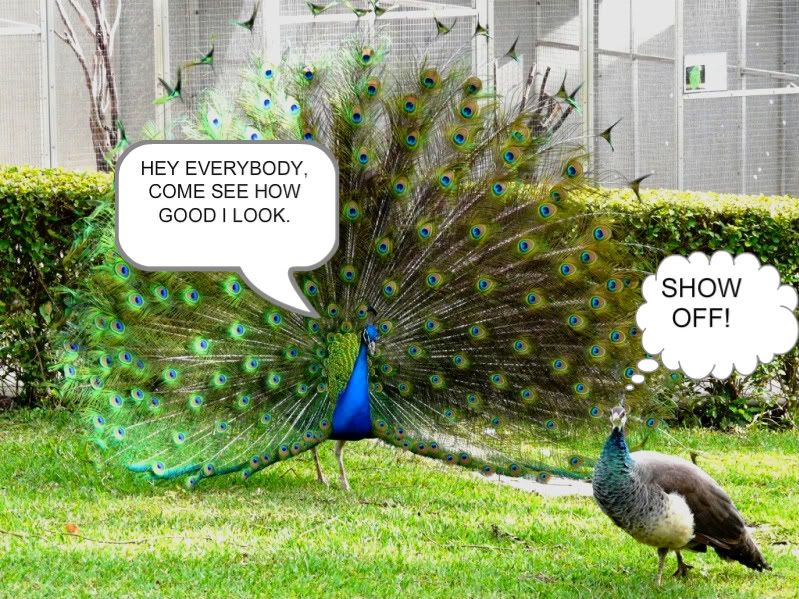
When thinking of ornately feathered birds, the peacock comes
to my mind instantly. Look at that difference between the male and the female!
Who knew that boys could look so much better than their female counterparts?
For this blog post, I am going to take a few steps back and shed some more
light on why so many male birds are prettier than the females. Charles Darwin
developed a theory that explains this occurrence [3]. He proposed that the
traits that increase survival in a species are favored by natural selection. On
the other hand, traits that help a male win over females are influenced by
sexual selection. Sexual selection is the cause of the brilliant feathers on a
male peacock, the fiery red of a cardinal, and the red or orange on the crown
of a house finch.
Male and Female Peacock [4]
The Special One
So why are the males the more colorful of the 2 sexes? This
is because it is the MALES job to attract the female. The female can pick and
choose over whichever male bird she fancies. That must be nice… You may be
asking yourself why do bright colors or long feathers seem attractive to the females.
Why don’t they just choose any ole bird? This is because the females know that
the most attractive bird is most likely the healthiest and will pass on the “best”
genes to her future offspring[3].
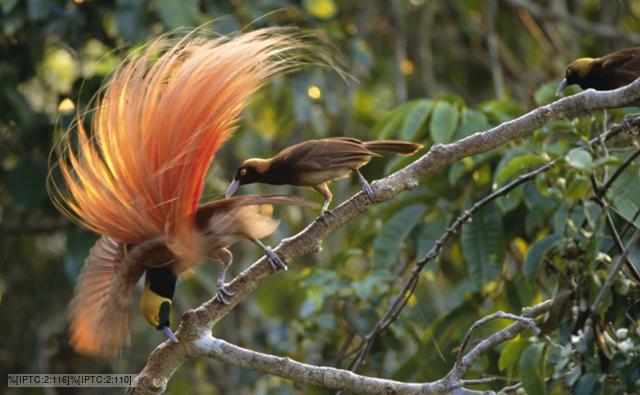
Birds of Paradise [5]
Walk the Walk and Talk the Talk
Bright lengthy feathers aren’t the only things female birds
are after. They want a man that can be a great singer and exhibits a specific
behavior they deem attractive. An interesting example of this is in the
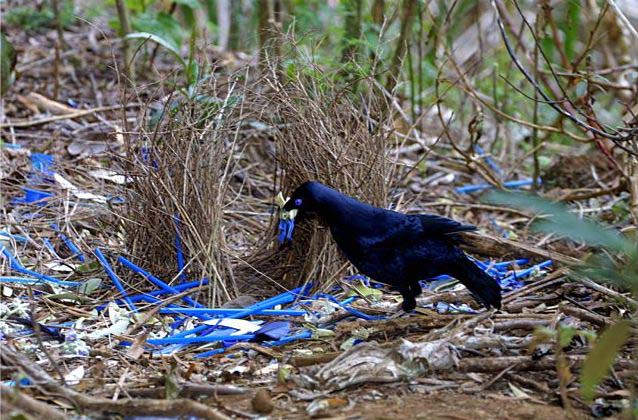
bowerbird species. The males create elaborate bowers (structures of various
sizes) and decorate them to attract the females. Each bowerbird has a specific
taste, and the male’s decoration displays their “personality”. Some like the
shiny beetle wings, while other male bowerbirds may choose flowers or berries.
The females drop by to check out the bowers and if they are impressed, the
males get to copulate with the female[6].
In some instances, the female bird can be more colorful and
ornate than the males of the same species. In these species the males incubate
and care for the young while the females fight over territory and mates. We
understand that the more competitive of the two sexes tends to be the more
brightly colored[3].
Conclusion
In many species of birds, males go through daily routines of
prepping for the females whether that is arranging their feathers or testing their
vocal chords. It is interesting to see the many ways sexual selection plays out
in bird species. Males spend much of their time and energy growing out
beautiful feathers, singing for hours, and “dancing” in some instances. If you
are a man and think your girl expects too much of you, then remember that she
never made you build a bower with aluminum cans, fungi, and leaves before the first date.
It is a sunny 75 degrees outside, however the only things I can think about right now are Tylenol, Nyquil and my bed. Despite having a plethora of things to achieve today, my body decided to call it quits for the day, closing up my throat in between hoicks of phlegm while plaguing me with a headache and a desire for unnecessary sleep. I would tell you just how hot I am, but at the risk of sounding like a 65 year old chain smoker I will leave it to the thermometer. Oh great, it says 100.8 degrees. Now I have a fever, too? While these may be the common symptoms of the flu, my body may just be trying to tell me something…
Darwinian Medicine
Is this what we have become? [5]
We live in a busy and sometimes stressful world; therefore it is not surprising that any time we feel even slightly under the weather, we immediately attempt to treat the symptoms so that we may be able to return to our day to day lives as quickly as possible. No harm, no foul, right? Well it as it turns out…not always. Evolutionary medicine (also termed Darwinian medicine) is a relatively new medical practice that looks to our evolutionary history for answers to questions such as; why and how do we get certain maladies? and how can we help to prevent illnesses in the first place [1]? An interesting example given by Dr. Marlene Zuk in Riddled with Life is the ever-increasing problem of obesity. Zuk argues that we are chemically designed to keep on weight due to the chemical leptin. When stores are low, the mind tricks the body into thinking that it is starving and hence triggers hunger and immediately begins to store fat. Furthermore, our bodies may crave foods that are high in calorie content not because of flawed self-restraint, but rather as an evolutionary adaption to efficiently gain energy from as little food as possible. In a hunter-gatherer society where food was scarce and starvation a real threat, it makes sense that the body would need a backup plan for storing fat, and not one for shaving it off [1,2].
Why Am I so Hot?
Dipsosaurus dorsalis [6]
Looking at the process of natural selection to help explain the relationship between the body and disease (rather than seeing disease as a threat to an otherwise flawless body) allows physicians to infer when the body’s response to an illness may in fact be beneficial and not a side effect caused by the pathogen itself. Most people instinctively know that the fever is an indicator that something is wrong with the body. However, proponents of evolutionary medicine argue that getting a fever is the body’s response to infection, and that it may actually increase the production of cytokines to increase immunity [1]. Studies by the University of Michigan reveal that the lizard Dipsosaurus dorsalis is an ectotherm that actively seeks the hotter areas of a room when infected with sodium salicylate. What is even more astounding is that the lizards that were exposed to higher temperatures recovered faster from infection [3]. Though we are endotherms who produce our own heat and do not rely on external sources to warm our bodies up, these results can indeed be transferred to mammals as we do not change our behavior but our metabolism to overcome illness. Taking medication to reduce a fever can therefore put you at risk of silencing a helpful mechanism and therefore having a slower recovery.
What About the Other Symptoms?
Limit the spread of influenza by covering your mouth [7]
It is most important when applying evolutionary medicine to ask whether the symptom is the body’s defense or the pathogen’s offence. For example, the respiratory tract is lined with mucus that traps dirt and pollen. When the body recognizes an unusually high dose of pathogen, the body responds by producing extra mucus to prevent the invader from entering the body. If too much is produced and not expelled, the airways are stimulated and a cough results, expelling the excess mucus from the airways and keeping the lungs safe from contact [4]. However, coughing releases infected particles in the mucus and saliva which increases spread of the pathogen to other victims. Friend or Foe? While a tingling throat and fever may be annoying pre-cursors of the flu, we must realize that the cost of responding to a false positive is far less than the cost of not responding to a false negative [1]. This means that at any sign of an intruder, the body is ready for attack because it does not want to risk holding fire in case of ambush attack. So how do we know whether to treat symptoms or not? Essentially, the goal of evolutionary medicine is to discover without a doubt where the symptoms are coming from. As for me, I am going to make myself a cup of tea and crawl back in to bed.
Selective pressures are the driving mechanisms for change in populations, and at one point in time, selective pressures chose the mechanisms of sexual reproduction over those of asexual reproduction. To help understand what types of things can decide whether the selective pressures sexual to asexual reproduction, let's take a look at the advantages and disadvantages of sexual reproduction.
Disadvantages
There are significant disadvantages to sexual reproduction, and while these are not all of them, here are some important ones. Most of these disadvantages are lessened, if not mitigated, by reproducing asexually.
Everything has an energy budget that it must balance by the end of the its life. Even on a smaller scale, if more energy than usual is consumed in one aspect of activity, then another such aspect suffers from a deficiency. Finding a mate is a very strenuous activity. For males, as can be seen in Superb Bird-of-Paradise (birds of paradise), elaborate mating rituals are very costly to the organism [4].This cost may be superficial as first, such as spending energy showing off to potential mates takes away energy from gathering food, but can also be less ostensible, such the price payed for such extravagant male characteristics - testosterone [1] - has its own set of adverse effects. Asexual mating removes the need to impress, and therefore the energy expenditure required to show off to the opposite sex. That very energy could be diverted towards reproducing more offspring, increasing the reproductive success of that organism.
The Video from class showing the intense mating rituals of birds of paradise:
Sex itself consumes time. As can be seen from these dolphins, mating can happen very quickly. And as can be seen in these octopi, staying in the mating encounters could potentially become dangerous (fellow on the right). The primary reason why this is true, is because both partners are vulnerable to attack during intercourse. Besides copulation taking up time, sexual reproduction is usually coupled with time spent investing in the next generation. This may be anything from sitting on eggs as they incubate, to gathering food, to having to work two jobs to make sure tuition is paid. This idea returns to the one mention above: energy budget. Time is as important a resource as energy when it comes to budgeting and managing it. Organisms that have to allocate time to make sure their future generation is successful, are taking that time away from other activities. Say in some species, such as the bonobo, males are extremely polygamous [2]. If a male in that species had to expend extra energy and time to ensure that its progeny would survive, it would be directly impacting its ability to have access to other females and the potential increase in the total number of offspring it could have had. In fact, it is very difficult to find examples of creatures that have polygamous mating rituals and strong male parental care. This plays into the uncertainty males have about the father of the child.
An innate problem with sexual reproduction is that not all of an organism's genes are present in the next generation. Naturally, about a half of the genes in an individual comes from one parent, the other 50% coming from the other parent. The goal of reproduction is to make sure that the organism's own genes are successfully transmitted, yet sexual reproduction places a theoretical limit of only half said organisms' genes continuing. As successive generations reproduce, one's progeny becomes less and less representative of those original genes. Asexual reproduction guarantees 100% transmittance.
Whenever I hear the concept of only 50% of genes being transferred to the next generation, I remember a movie I watched when I was still in grade school. The movie is called Rabbit Proof Fence, and it told the story of three Aborigine girls who escaped from the "Moore River Native Settlement" to return to their families. The movie details the events of the Stolen Generation, a plan run by many agencies in Australia to remove Aborigine children and raise them in a western fashion, eventually having them bear children that were half Aborigine and half European in an attempt to breed out the Aborigine. Here is short clip film someone adapted and annotated for what seems to be a school project. I warn that some of the scenes are very intense.
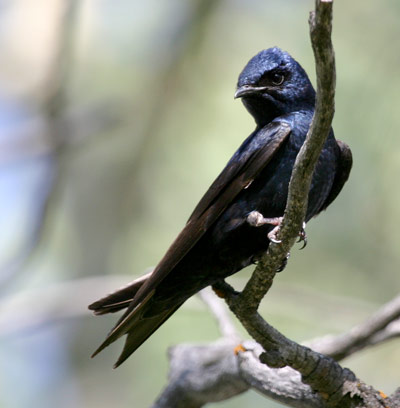
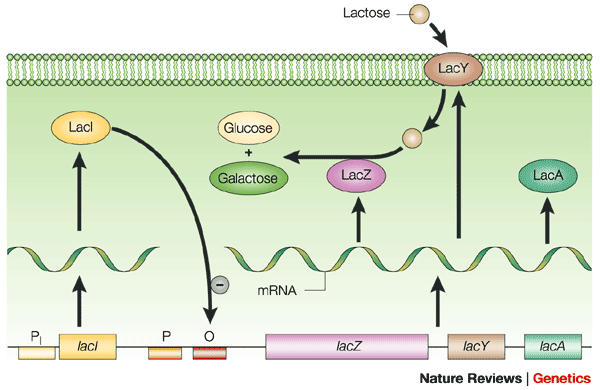
Parasites play an interesting role in the ultimate selective pressure, opting for either sexual or asexual reproduction. Sexually Transmitted Diseases are commonly cited as disadvantages to sexual reproduction, but I hesitate to include them as something that was determinant of sexual or asexual reproductive strategies. STD's are opportunists that have evolved to become successful in their own right. By being passed from host to host through the exchange of fluids, STD's are just taking advantage of a easy bridge. Other forms of infection, such as maggots in Purple Martins, are similar in this regard (opportunists) to other notable STD's such as HIV [3]. What can be considered influential in the determination of which strategy, sexual or asexual, is the extended concept of STD's. The passing of something deleterious. Harmful things can be anything from viruses and bacteria to simply destructive DNA. Say, in a hypothetical sense, a mutation occurs in a generally asexually reproducing bacteria that leads to a gene that would cause the cell to die. Suppose this gene is usually deactivated, but say in the presence of lactose, the mechanisms that would allow for the generation of lactase were defective and resulted in a protein that either did not digest the lactase, or otherwise led to harmful chemicals to persist in the cell. The cell, before the external pressure of lactose, would reproduce normally, and have many progeny. All of a sudden, there is a significant percentage of the population that would die because the harmful element was passed generation to generation. Asexual reproduction would not contact above the baseline, average intraspecies interactions (potentially even more reduced as contact and proximity required in mate selection would also be gone).
There wouldn't be boys in asexual reproduction. While some would call this an advantage to asexual reproduction, I chose to ambivalent. Regardless, there is an impact of boys being in a population. Say the distribution between males and females was equal, 50-50. Compared to population of a 100 asexually reproducing "females," there are half the amount of reproductive females. The reproductive success of females is restricted by the number of eggs they hold, and the reproductive success of males is, similarly, dependent on how many mates they can encounter [10]. The theoretical maximum is therefore the total number of eggs females can consecutively get fertilized in their life times. The asexually reproducing population, would by default have twice as many females, and therefore a greater theoretical maximum.
There is snail native to New Zealand called the Mud Snail, Potamopyrgus antipodarum. The snail has the ability to reproduce both sexually and asexually [5]. The asexually reproducing snail creates clones, while the sexually reproducing produces genetically varying offspring. Parasitic influences from shallow water trematodes select for sexually reproducing snails that would have a varying genetic resistance to the parasite. In deeper water, the asexually breeding snail dominates due to the lack of parasitic pressures [9].
Advantages
Despite these substantial negatives against sexual reproduction, it was selected for, and still is. As I am sure you are aware, the purpose of all adaptations is to help a population survive. It is interesting that regardless of all the downsides, the positives make up for it.
"Cleaning up" is a loosely defined term in regards to DNA. The replication of genetic material has many steps and can be condensed into two main types of DNA replication: mitosis and meiosis [6]. The focus of this post is not the differences between the two, but if you want to learn more, click here. The main relevant difference is the result of the two mechanisms. Mitosis results in two daughter cells, each genetic copies of their mother, while meiosis results in four haploid daughter cells, each a different genetic combination of the mother, and only half the genetic material. It is not to say that genetic information is lost in the process, but simply redistributed. Sexual reproduction requires the conjugation of a haploid egg and a haploid sperm, coming from the female and male respectively. What does this have to do with "cleaning up?" It all has to do with recombination [7]. In sexual reproduction, genes have the chance to switch it up. In a mother cell of a sexually reproducing organism, half of the DNA comes from its mother and the other half from its father. So, when it divides into the four daughter cells, it could be assumed that it splits into two cells with the mother's genetic information, and two with the father's. This is not the case. During meiosis, pairs of chromosomes rearrange themselves, resulting in new combinations of maternal and paternal genetic material. Moreover, DNA can also partake in crossing over, which allows for individual chromosomes exchanging genetic material, increasing the genetic diversity of the resulting four daughter cells. These processes allow for new combinations of traits in progeny, causing the focus of selective pressures to fall upon individual traits and not just the successfulness of the entire genome. Overtime, mutations that could result in less favorable traits would be selected against, essentially cleaning the genetic material of a population. Evidence of this can be found in a study conducted by R. Stephen Howard & Curtis M. Lively, here.
One undeniable benefit to sexual reproduction is genetic variability. In a population that doesn't suffer from selective pressures doesn't necessarily feel the need for genetic variability. Certain selective pressures are time dependent. These could be environmental pressures, which are comparatively short-lived pressures. An example of a constant selective pressure is good old parasitism. As I was mentioning earlier, parasitism has a kind of two way street deal with sexual reproduction. Because of sexual reproduction, organisms, and males specifically, are more exposed to parasites. Increased energy expenditure on masculine displays of virility draw energy from other processes, such as immune response. This male immunity, which is already relatively weaker than a female's due to testosterone (necessary for secondary male characteristics), is further weakened by increased energy consumption elsewhere, increasing the compatibility filter for assailing parasites [10]. But, because of genetic diversity, the likelihood that all individuals in the species are susceptible to a parasite decreases, thus selecting for a future generation to have a greater percentage of resistant individuals. This benefit has enormous benefits. An example where the lack of sexual diversity affected humans was the Irish Potato Famine. Almost all of the potatoes in Ireland were of the same lumper variety. These plants had be planted vegetatively, meaning that they were all clones [8]. When the potato blight hit Ireland, nearly eradicated the entire potato population. The lack of genetic diversity led to the parasite infecting the entire population unrestricted. This is a major concern today, as farmers continue to plant the same variety of genetically modified grain in an attempt to increase their yield [9]. There is a very real threat to these genetically modified crops, as they are already resistant to many generic parasites, and the hypothetical infection which could attack, would already be resistant plenty of preventative measures.
Are males worth it? To many species, the answer is yes. The benefits of sexual reproduction outweigh the costs for many species. And while there are still many species of organisms that continue to reproduce asexually, it is as nature intended. Parasitic pressures drove organisms to reproduce in such a way that resulted in increased genetic variability in the population as well as the steady removal of unsuccessful traits. Sexual reproduction doesn't speed up evolution, and doesn't benefit an individual, but the entire population. An interesting thing to consider as well, some of the very downsides of sexual reproduction have become positives in that they give a certain degree of satisfaction. Finding a mate, for example, isn't time consuming, as it is usually the goal.
[9] Zuk, M. Riddled with Life: Friendly Worms, Ladybug Sex, and the Parasites That Make Us Who We Are. Orlando: Harvest, 2008. Print. [10] Combes, Claude. The Art of Being a Parasite. Chicago: University of Chicago, 2005. Print.
The Male and Female
Both males and females are affected by the same diseases and parasites. Even though this is true, on average women live about 5
years more than males [1]. Males tend to have higher mortality rates than
females for almost all causes of death across the lifespan. The major difference peaks
in young adulthood when males reach reproductive maturity and begin to compete
for mates. There is not a parasite that is specific to just males or females,
but parasites kill twice as many males in developed countries and four times as
many males in underdeveloped countries as compared to females [2]. It
seems that not only do males tend to get sicker than females, but
they also tend to be more susceptible to parasites. If parasites and diseases aren't specific to
gender, what is the cause for males' mortality rates?
Why Males are the Sicker Sex?
Physiologically: Testosterone Levels
Vertebrate males have different
levels of sex hormones than that of females. Testosterone is the major sex
hormone in males that improves their secondary sex characteristics and allows
them to produce sperm. Although this hormone is very important to males, it
seems to be a main reason of why males are the sicker sex [3]. Testosterone depresses
immune cells, tissues, and organs. Not only does testosterone decrease the
immune system, it also increases other hormone levels such as cortisol, which
is a stress hormone that suppresses the immune system even further. The more
testosterone a male has, the weaker his immune system becomes [4]. Not only does it
decrease the immune system but it can give males something called the
"Testosterone Storm". This is a surge in testosterone levels that
seems to make men act reckless [1]. Ecologically: Roaming
Males have to search for females
to mate with which involves a good bit of roaming. Doing this expends a lot of
energy which has a negative impact on the immune system. Roaming will also increase
their exposure to parasties and pathogens[5]. Sometimes mating rituals or
habits cause males to become more exposed to parasites because they must stay
in a certain area for a long period of time trying to seduce females [6]. Sociologically: Competition
Some males must fight or compete
with other males in order to mate with females. Male to male aggression is
highest when only a proportion of males are able to be considered a desirable
mate or marriage partner. Cultures of species with polygamous cultures
or species increase competition among males [7]. Polygamous species favor males with higher testosterone levels because they will compete more, but this also decreases the immune system as mentioned earlier. Competition among males in a species fighting for a mate can receive fatal wounds which also contributes to a higher mortality rate than that of females. Males that must compete are usually much larger than the females in their species. Moore and Wilson found that the greater the difference in size between males and females, the higher the levels of parasitism in males[8]. They also found the more intense the competition among the males, the sicker they were [3].
Antechinus
The Antechinus is a rodent-like
marsupial mouse that lives in Australia. Some antechinus species have short
term breeding periods. These animals are usually solitary except for during the
breeding periods. During a breeding period, both male and female antechinus
are ready to mate. This means that the male antechinus must fight for his
females. They spend the majority of rut competing with other males for females.
Competing with other males causes a lot of stress on the antechinus males. They are also constantly roaming as they try to find as many females as possible to mate with.
Stress produced by the environment or social interactions have been recognized
to increase the levels of corticosteroids which also affects the immune system. During this time, the male's digestive system will begin to break down due
to stress and lack of eating. The large amount of corticosteroids released
during this time cause immune system to failure. This makes the males unable to
defend themselves against disease and parasitism. After the breeding period, the females are
pregnant and all of the males die. The females can live up to two more years
after their first mating season [9].
The example of the Antechinus is
a dramatic example of how intensely males can be affected by competition,
constant roaming, and the release of a large amount of stress hormones during the mating season. The
Spadefoot Toad
The Spadefoot toad is an
amphibian that lives in the desert. They spend the majority of their time
borrowed underground to keep cool. They come out during periods of rainfall to
find a mate. They will travel to where the rain has made a pool and sit in the
water calling for a mate. A female toad will visit a pond once a year and mate.
They then lay their eggs and go back to a life of being alone. The longer a
male toad is immersed in the water, the more susceptible he is to trematodes
that live in the water. They will get more trematodes than females simply
because they are exposed in the water pools for a longer period of time [6].
The Spadefoot is an example of roaming and exposure. They will roam searching for a pool of water
and stay in that location until a mate happens to hear his croaking.
Do Females
have an advantage?
Well,
it is obvious that males will be sicker because of the previously stated
reasons, but do females have advantages that make them healthier? Indeed, they
do! Females have a sex hormone called Estrogen. This sex hormone is known to do
just the opposite of Testosterone. It increases the immune system by stimulating T cells [10]. T cells function by recognizing self from non-self and help stimulate an immune response [11]. Most females, with the exception of some
species, do not roam or search for their mates. They let their mates find them which decreases exposure to parasites.
Females can also pick and choose a mate from the males that they encounter. This means that they are not competing for their mates.They can
pick the healthier male to mate with. This will decrease the chance that the
male she chooses will have parasites that can be passed to her.
When estrogen is present, it increases the ability of a T cell to respond to an antigen and mediate an immune response [10].
What Is Coevolution? Coevolution is the process of two species putting
selective pressures on one another. The reciprocal selective pressures allow
both species to evolve, while not allowing one to get ahead of the other [4]. Coevolution
is most likely to occur between species with a persistent relationship that are in close ecological interaction with each other. There are three types of symbiotic relationships that are formed
through coevolution. These relationships include: predator/prey, parasite/host,
and mutualistic [2].
The relationship between Cuculus canorus (cuckoo) and Acrocephalus
arundinaceus (reed warbler) is an excellent example of coevolution between a
parasite and its host. The cuckoo is a parasitic bird that tricks other bird
species into raising their own young [4]. While the reed warblers are absent from
their nest, the female cuckoo swallows the egg of the host species and then
replaces the egg with her own young. The tricked reed warbler parents then proceed
to raise the egg as their own. Once the cuckoo egg hatches, the cuckoo tosses
the host eggs to their death [4]. Once parasitized, the reed warbler’s
reproductive success is zero. Therefore, genetic variation that allows the reed
warblers to stop the cuckoos will be naturally selected for and passed on to
future generations [4]. The cuckoos then reciprocate and evolve traits which
allow them to persist longer in the host nest. Both species are in a constant
arms race to outsmart the other species [3].
The female cuckoo will lay eggs that appear to mimic
the appearance of the eggs of their hosts, which hinders discrimination and
removal of their eggs by the reed warblers. In the first stage of coevolution
between C. canorus and A. arundinaceus, natural selection
favors the birds that better discriminate cuckoo eggs from their own [4]. This rejection
behavior then puts selective pressure of the cuckoo to lay eggs that resemble
the host egg. This mimicry puts more pressure on the reed warbler to rejection
a foreign egg even if it greatly resembles its own [3]. This cycle of better
detection and rejection continues as long as there is continual renewal of genetic
diversity in both populations.
Acacia Tree Ants
The relationship between the Pseudomyrmex ferruginea (acacia ant) and the Acacia cornigera (bullhorn acacia) is another example of coevolution.
Unlike the cuckoo and reed warbler, this is a mutualistic relationship. The
acacia ant no only depends on the plant for food and shelter but it also protects
the bullhorn acacia from preying insects and other plants [1]. The acacia have evolved traits in order to
support this mutualistic relationship. The tree has swollen and hollow thorns that
serve as both the ants’ home as well as their protection. The tree also provides
the ants with food both as nectar and Beltian bodies [1]. The ant has also evolved specific characters
to aid in maintaining this mutualism. The ants serve as a defense against
herbivores and they also remove fungal spores in order to prevent fungal
pathogens from entering the plant. The characters of both the ant and the
acacia are mutualistic traits that have evolved for the interaction in reciprocal
fashion [1].




.png)